Payroll should be one of the most predictable business processes in any enterprise. Employee data exists. Payroll rules are documented. Processing schedules are fixed. Yet payroll continues to be one of the most compliance-sensitive and operationally demanding responsibilities managed by Human Resources and Finance teams.
The complexity increases rapidly as organisations grow.
Multi-jurisdiction tax regulations evolve regularly. Statutory deductions differ across countries and regions. Employee benefits vary by role, location, tenure, and employment type. Time and attendance records arrive from multiple systems with inconsistent formats. Mid-month joiners, employee exits, leave encashments, bonuses, retroactive salary adjustments, and overtime calculations all introduce exceptions that require careful handling.
For organisations operating across India, Southeast Asia, or multiple international locations, manual payroll management creates significant compliance and operational risk.
Robotic Process Automation (RPA), Business Process Automation (BPM), and Agentic AI work together to automate payroll compliance while improving accuracy, accelerating payroll cycles, and maintaining complete audit readiness.
Why Payroll Compliance Becomes Difficult at Enterprise Scale
Manual payroll processes introduce risk at every stage of the payroll cycle.
Employee information must be consolidated from HRMS platforms, attendance systems, leave management applications, benefits platforms, payroll systems, and expense management tools before payroll calculations can begin.
Every transfer introduces the possibility of missing records, inconsistent field mapping, duplicate information, or outdated employee data.
Regulatory compliance further increases complexity.
Organisations operating in India must manage Provident Fund (PF), Employee State Insurance (ESI), Tax Deducted at Source (TDS), Professional Tax (PT), labour regulations, and statutory filing deadlines. Similar jurisdiction-specific obligations exist across every country where employees are located.
Regulatory updates require immediate implementation. A revised tax slab, updated statutory threshold, or policy amendment must be reflected accurately during the next payroll cycle to maintain compliance.
Payroll teams consistently report that calculation errors are rarely caused by payroll software itself. Most issues originate from poor upstream data quality.
Late attendance approvals, incorrect leave balances, missing overtime records, incomplete onboarding information, and delayed employee changes all generate exceptions that disrupt payroll processing.
Incorrect payroll directly affects employee trust, creates additional work for HR and Finance, and increases statutory compliance exposure.
Using RPA for Payroll Data Collection and Validation
Robotic Process Automation provides the first layer of payroll compliance automation by gathering employee information from every relevant business system before payroll processing begins.
RPA bots automatically collect information from HRMS platforms, attendance systems, leave management software, benefits administration tools, payroll applications, and expense management systems.
Before payroll calculations begin, automated validation rules verify every record for completeness, consistency, and business compliance.
Missing attendance approvals are identified automatically. Employees without assigned cost centres are flagged for review. Overtime exceeding policy thresholds is routed for manager approval before payroll processing continues.
Payroll teams receive one validated, structured data set that significantly reduces manual reconciliation before every payroll cycle.
- Automated extraction from HRMS, attendance, leave, benefits, expense, and payroll systems.
- Pre-payroll validation of employee records using business rules.
- Automatic identification of missing, late, or conflicting information.
- Structured, traceable payroll data ready for processing and audit.
Business Process Management for Payroll Governance
After payroll data has been validated, Business Process Management governs every stage of payroll execution.
Instead of depending on manual checklists or institutional knowledge, payroll follows structured workflows that enforce compliance automatically.
Validation checkpoints, statutory calculations, approval stages, payment authorisation, and regulatory filing all occur within governed workflows.
Every stage requires approval from authorised personnel before the next activity begins. Escalations are triggered automatically whenever deadlines are at risk.
For organisations operating across multiple countries, independent payroll workflows can execute simultaneously while maintaining country-specific compliance rules, statutory calculations, filing schedules, and approval structures.
This governed approach ensures payroll consistency while generating complete operational visibility throughout every payroll cycle.
Using Agentic AI to Resolve Payroll Exceptions
Even highly automated payroll operations continue to encounter complex exceptions.
Mid-month employee onboarding, retroactive salary revisions, leave encashments, bonus adjustments, benefit changes, and payroll corrections frequently require contextual business decisions.
Agentic AI introduces intelligent exception management that extends beyond traditional rule-based automation.
Rather than routing every exception directly to payroll administrators, intelligent agents evaluate each scenario against payroll policies, statutory rules, historical employee records, and business context.
Where appropriate, AI calculates adjustments, prepares recommended actions, applies approved changes automatically, or escalates complex situations with complete supporting information.
Agentic AI also performs payroll anomaly detection by identifying unusual salary movements, unexpected deductions, or abnormal payment values before payroll is released.
Potential overpayments, underpayments, and compliance issues are identified proactively instead of being corrected after payroll has been processed.
Automated Audit Trails for Payroll Compliance
Every payroll cycle represents a statutory compliance event.
Tax authorities, labour inspectors, internal auditors, and employees frequently require organisations to demonstrate how payroll calculations were performed and approved.
Manual payroll operations often generate fragmented documentation spread across spreadsheets, emails, reports, and approval records.
Automated payroll workflows generate comprehensive audit trails automatically.
- Every payroll calculation is recorded together with supporting business rules.
- All approvals are timestamped and linked to authorised personnel.
- Payroll exceptions are documented together with their resolutions.
- Statutory filings remain directly connected to each payroll cycle.
- Complete payroll history is available immediately during audits or regulatory reviews.
This significantly reduces preparation effort while strengthening statutory compliance.
How Aptimeta Automates Payroll Compliance
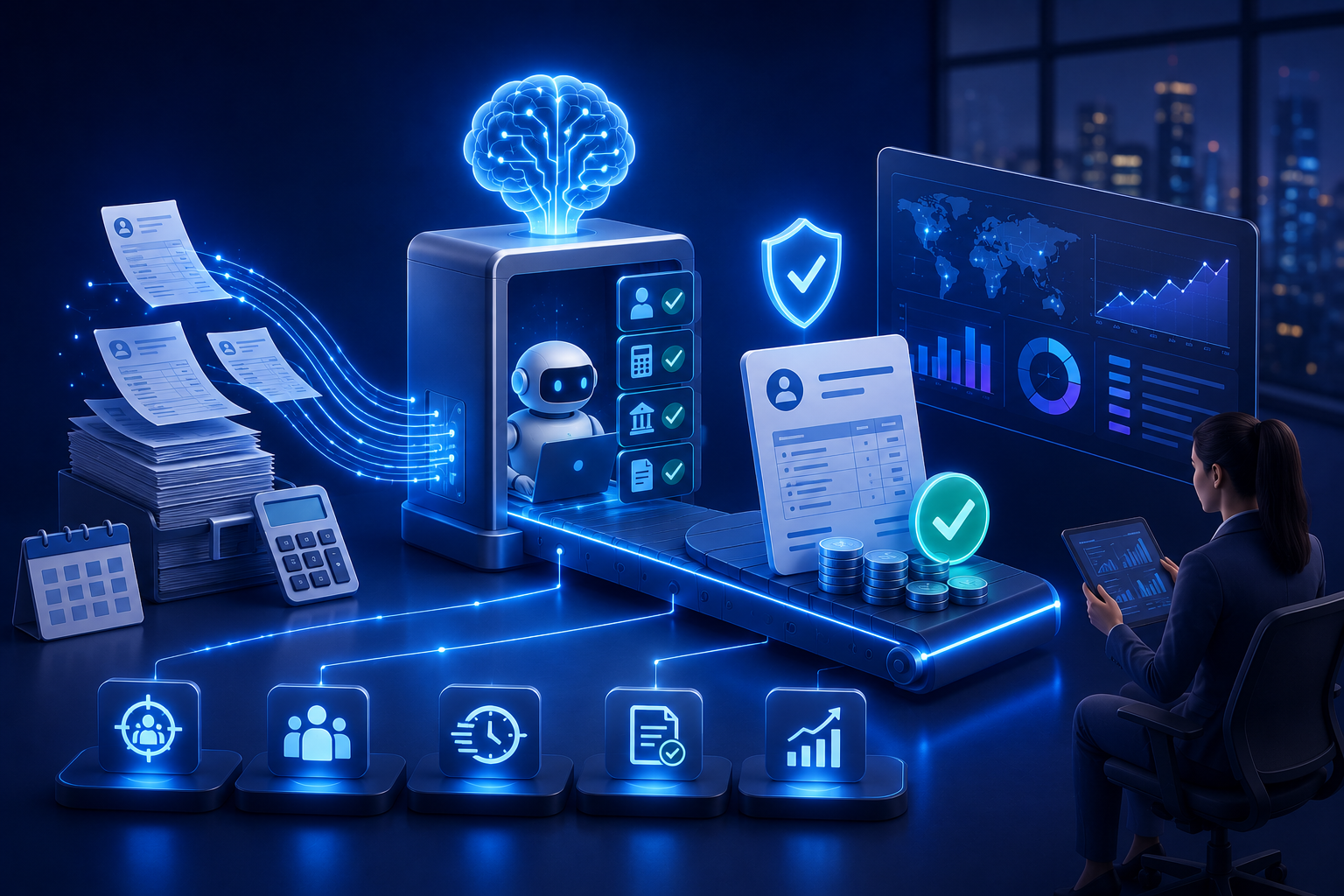
Aptimeta combines Robotic Process Automation, Business Process Automation, Agentic AI, and enterprise workflow orchestration within one intelligent payroll automation platform.
RPA automatically extracts and validates employee information from every source system before payroll begins.
BPM governs payroll processing through structured compliance workflows covering statutory calculations, approvals, payroll execution, disbursement, and regulatory filing.
Agentic AI intelligently manages payroll exceptions, salary adjustments, anomaly detection, and complex policy scenarios while reducing manual intervention.
The entire payroll lifecycle generates a complete, immutable audit trail that supports statutory inspections, internal audits, employee queries, and regulatory reporting.
For organisations managing payroll across India or multiple international jurisdictions, Aptimeta provides one unified orchestration layer that delivers consistent governance, regulatory compliance, operational visibility, and intelligent payroll execution.
Discover how Aptimeta helps enterprises automate payroll compliance with Agentic AI, Business Process Automation, Robotic Process Automation, and intelligent workflow orchestration—creating faster, more accurate, and audit-ready payroll operations.