
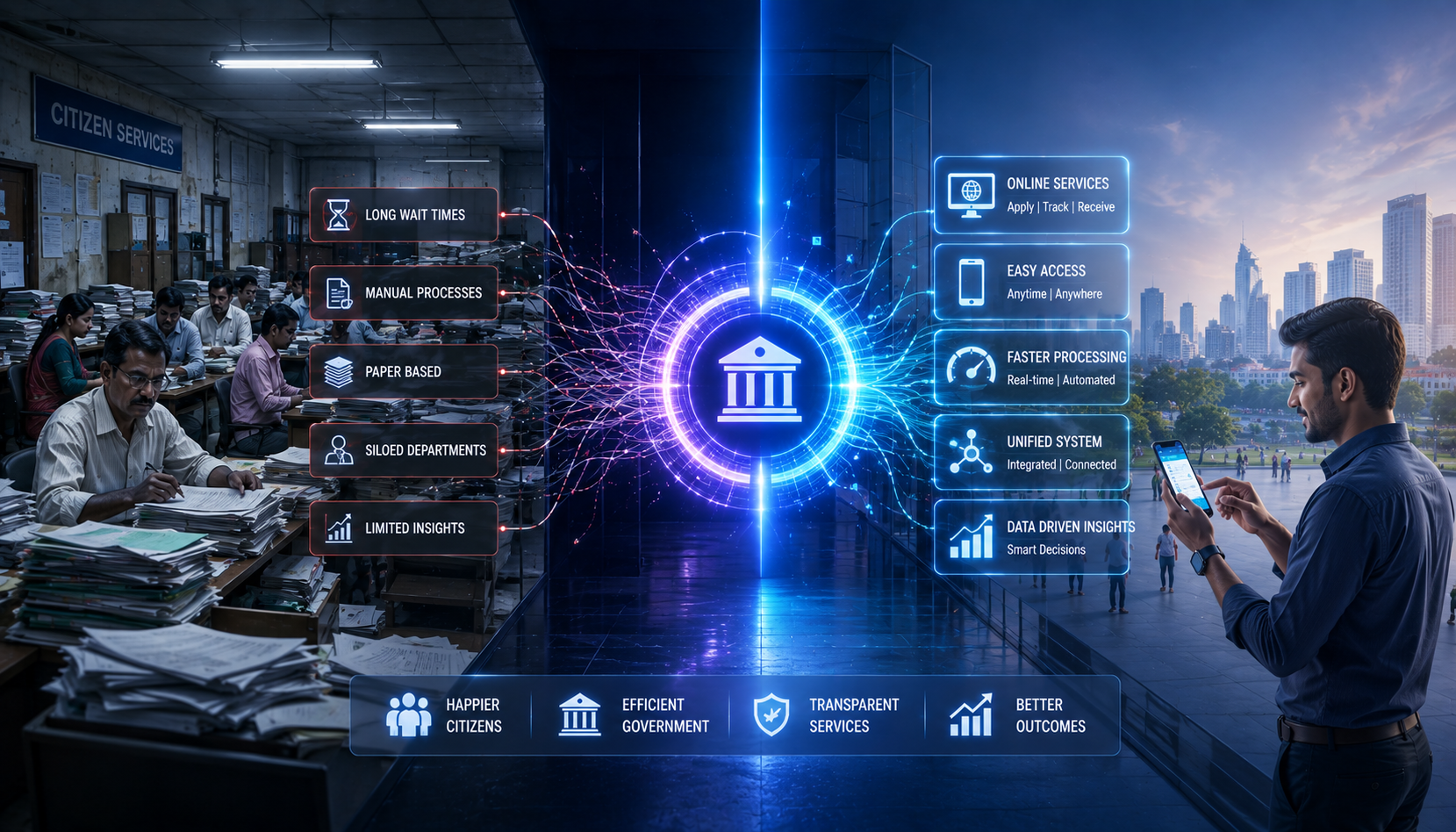
How Automation Can Improve Citizen Services Without Replacing Legacy Systems
Government agencies face a familiar dilemma when citizen service delays become politically and operationally unavoidable. The systems causing the delay are often deeply embedded legacy infrastructure, and replacing them properly is a multi year, high risk, high cost undertaking that no administration wants to own the disruption of, even when everyone agrees the underlying system needs to change eventually.
This dilemma frequently results in paralysis. Citizen facing delays persist year after year because the only solution anyone seriously proposes is the full modernization project that never quite gets funded, approved, or started, while the paper based and manually processed workflows underneath continue to generate the same backlogs and complaints.
Automation offers a genuinely different path, one that does not require replacing the underlying legacy system at all. By automating the document processing, workflow routing, and citizen communication layer that sits on top of existing systems, agencies can meaningfully improve service delivery speed and consistency while the harder, longer term modernization conversation continues separately, on its own timeline.
Why the Full Replacement Approach Keeps Stalling
Core government systems, including benefits eligibility engines, licensing databases, and records management platforms, are frequently decades old, deeply customized over years of accumulated policy changes, and treated as too risky to replace without an extended, carefully staged migration.
This caution is often justified. A failed migration of a core benefits or licensing system can have real consequences for citizens depending on it.
The practical result is that modernization initiatives get proposed, scoped, budgeted, and then frequently paused, descoped, or restarted as political priorities and budget cycles shift. This leaves the underlying legacy system in place far longer than anyone originally intended, while citizen facing delays continue accumulating in the meantime.
Automating the Layer Around the Legacy System
Rather than waiting for a full core system replacement, automation can be applied to the layer immediately around it: how applications and documents are received and processed, how they are routed for review and approval, and how citizens are informed of status, without touching the underlying system of record itself.
Intelligent document processing can extract and validate information from citizen submitted forms and supporting documents automatically, feeding that validated data into the legacy system through existing interfaces rather than requiring the legacy system itself to change.
Workflow orchestration can manage the review and approval routing on top of the legacy system, providing consistent tracking, automatic escalation, and status visibility that the underlying legacy system may never have been designed to provide on its own, without requiring any modification to that system’s core logic.
- Automated capture and validation of citizen submitted applications and supporting documents
- Workflow routing and status tracking layered on top of the existing legacy system of record
- Automatic citizen communication and status updates without manual staff follow up
- No disruption to the underlying legacy system, reducing risk compared to a full replacement
What This Means for Citizens Waiting on Services Today
The practical benefit of this approach is that citizens waiting on permit approvals, benefits determinations, or license renewals see faster, more consistent processing without needing to wait for a multi year modernization program to complete.
Applications that previously sat in a physical or email inbox for days before anyone reviewed them can be captured, validated, and routed for review within hours, with automatic status updates replacing what used to require a phone call to check.
This does not eliminate the case for eventual core system modernization. That conversation remains valid and important on its own merits. It decouples citizen facing service improvement from that much longer, higher risk timeline, so service delivery does not have to remain frozen while the bigger infrastructure question gets resolved.
How Aptimeta Modernizes the Service Layer Without Replacing Core Systems
Aptimeta’s BOAT platform, built on Studio and Orchestrator, automates document capture, validation, and workflow routing around existing government systems of record, without requiring those core systems to be replaced or heavily modified.
DocuBrain extracts and validates information from citizen submissions regardless of format, feeding validated data into existing systems through available interfaces. Workflow orchestration manages review, approval, and citizen communication with full visibility and audit tracking.
For agencies facing pressure to improve citizen service delivery while a full modernization program remains years away from completion, this layered approach offers a practical, lower risk path to meaningful improvement in the meantime.
Discover how Aptimeta can help modernize citizen service workflows around existing legacy systems without disrupting the systems agencies depend on.