
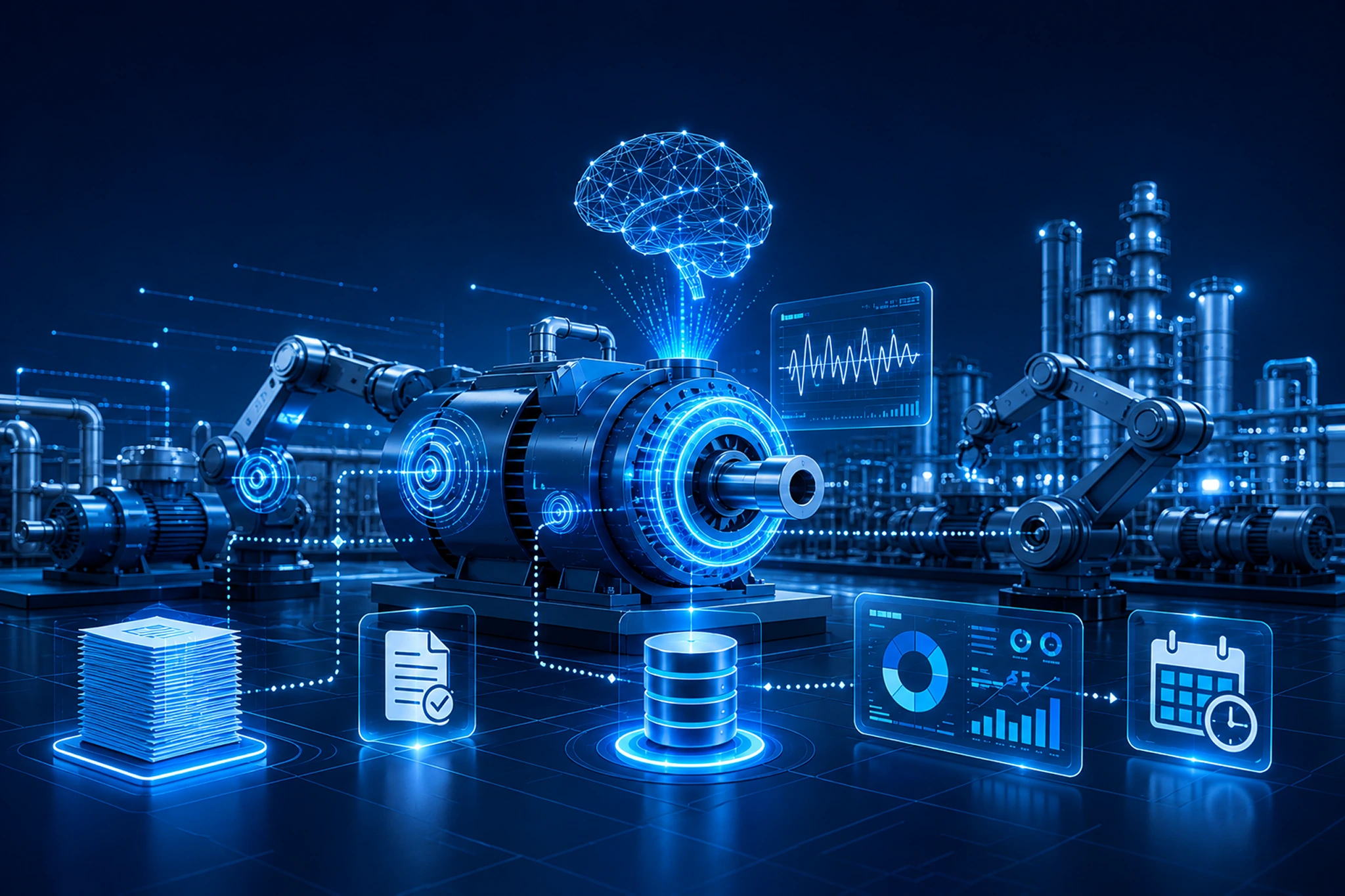
Predictive maintenance promises to reduce equipment failures by identifying issues before they become costly breakdowns. Sensors monitor machine performance, analytics detect anomalies, and maintenance teams intervene before production is disrupted.
In reality, predictive maintenance also generates an enormous amount of documentation. Inspection reports, work orders, asset histories, compliance records, calibration certificates, sensor data, and incident reports must all be captured, organised, and maintained accurately across multiple systems.
Without intelligent automation, this documentation quickly becomes fragmented, making it difficult for maintenance teams to find the information they need when equipment issues occur.
Intelligent Document Processing (DocuBrain), combined with Robotic Process Automation and workflow orchestration, transforms maintenance documentation into structured, searchable, and actionable operational intelligence.
The Documentation Challenge in Modern Maintenance
A modern manufacturing facility generates thousands of maintenance-related documents every year.
- Daily inspection reports from operators and technicians.
- Preventive and corrective maintenance work orders.
- Equipment specifications and asset records.
- Calibration certificates and compliance documentation.
- Failure investigations and root cause analysis reports.
- IoT sensor readings, vibration analysis, and predictive maintenance logs.
Each critical asset accumulates hundreds of maintenance records throughout its lifecycle.
When this information is distributed across paper forms, spreadsheets, shared folders, CMMS platforms, and email, finding accurate maintenance history becomes difficult during equipment failures or compliance audits.
Where Manual Maintenance Documentation Fails
Inconsistent Data Quality
Manual data entry inevitably introduces inconsistencies.
Technicians often complete work orders after long shifts. Equipment numbers may be entered incorrectly. Maintenance dates can be missed or recorded late. Inspection notes may be incomplete, while replacement parts are documented in notebooks rather than enterprise systems.
These small inaccuracies accumulate over time and reduce confidence in maintenance records.
Impact on Predictive Maintenance
Predictive maintenance depends on accurate historical information.
Missing maintenance records, incomplete inspection reports, or incorrect service histories reduce the quality of predictive models.
If maintenance history cannot be trusted, predictive recommendations become less reliable, reducing the effectiveness of equipment monitoring investments.
How Intelligent Document Processing Automates Maintenance Records
DocuBrain captures maintenance information from multiple document sources and converts it into structured digital records.
Completed work orders, whether handwritten or digital, are automatically classified and processed. Equipment identifiers, maintenance activities, replacement parts, technician details, completion times, and supervisor approvals are extracted without manual data entry.
The platform validates mandatory information before routing documents through workflow orchestration, ensuring maintenance records remain complete and accurate.
Automating Inspection and Compliance Records
Inspection reports, calibration certificates, audit documentation, and maintenance compliance records are automatically captured using Intelligent Document Processing.
Inspection dates, equipment identifiers, measurements, compliance status, and maintenance findings are extracted and indexed automatically, making documentation immediately searchable while ensuring regulatory deadlines are monitored continuously.
Maintenance certifications and calibration schedules are automatically tracked, allowing organisations to receive alerts before compliance deadlines are missed.
Connecting IoT Data with Maintenance Documentation
Modern manufacturing equipment continuously generates operational data through IoT platforms and monitoring systems.
Sensor readings such as vibration, temperature, pressure, runtime hours, and equipment utilisation are automatically combined with maintenance documentation to create a complete equipment history.
When unexpected failures occur, incident reports, root cause investigations, and corrective actions are captured and linked directly to equipment records, creating a single source of operational truth.
From Documentation to Predictive Intelligence
Once maintenance documentation becomes structured and reliable, it provides the foundation for intelligent predictive maintenance.
Historical maintenance records improve machine learning models by supplying consistent training data. Sensor readings can be validated against previous maintenance activities, helping distinguish genuine equipment failures from temporary operational variations.
Instead of receiving generic alerts, maintenance teams gain actionable recommendations supported by historical performance, equipment age, operating conditions, and previous repair history.
This enables maintenance planners to optimise schedules, reduce emergency repairs, extend equipment life, and improve manufacturing reliability.
How Aptimeta Modernises Maintenance Operations
Aptimeta combines Intelligent Document Processing, Robotic Process Automation, Business Process Automation, Agentic AI, and enterprise workflow orchestration within one intelligent automation platform.
Maintenance documents, inspection records, compliance certificates, IoT data, incident reports, and equipment histories are automatically captured, validated, connected, and routed through intelligent workflows, giving manufacturers complete visibility into asset performance and maintenance operations.